



On the warm-water stretch of the Northumberland Strait, east of Moncton, there is a beach town home to a massive lobster statue, the self-declared largest in the world. I travelled to Shediac last summer for a wedding and got to pay my respects to this huge crustacean. On summer evenings many locals and tourists alike will gather at Parlee Beach to watch the sunset and dip their toes in some of the warmest saltwater in the country. The Acadian Tricolour flag flies from porches and masts as French drifts to and fro into English, one of the only places in the country where “Franglais” dominates conversations. The entire coast has a feeling of shared identity rooted in its Acadian history. This is Beauséjour: the southeast region of New Brunswick, where the docks run on lobster and snow crab.
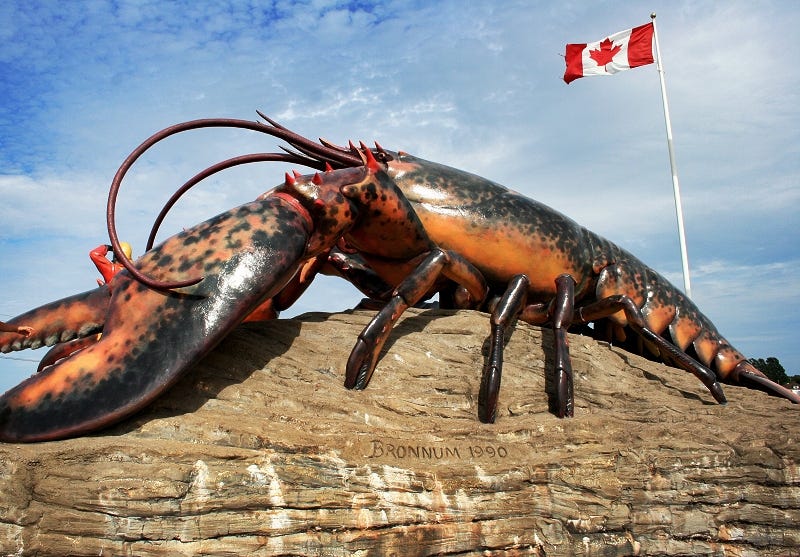
World's Largest Lobster on the waterfront in Shediac, New Brunswick. Photo: JAKclapclap47, public domain, via Wikimedia Commons.
.jpg)
The demographics here are about as Acadian as the country gets. Roughly 71% of residents have some French knowledge (81st / 343), one of the most French ridings outside Quebec. It’s also an older riding compared to the country around it (33% of the population is over the age of 65, 65th) and still earns a living from the water in a way most of Canada no longer does. Cap-Pelé smokes and packs fish, the boats out of Shediac and along the shore bring in the local catch, and the fishery that feeds the coast sells most of that catch abroad. Which, on this coast, means across the border into the United States.
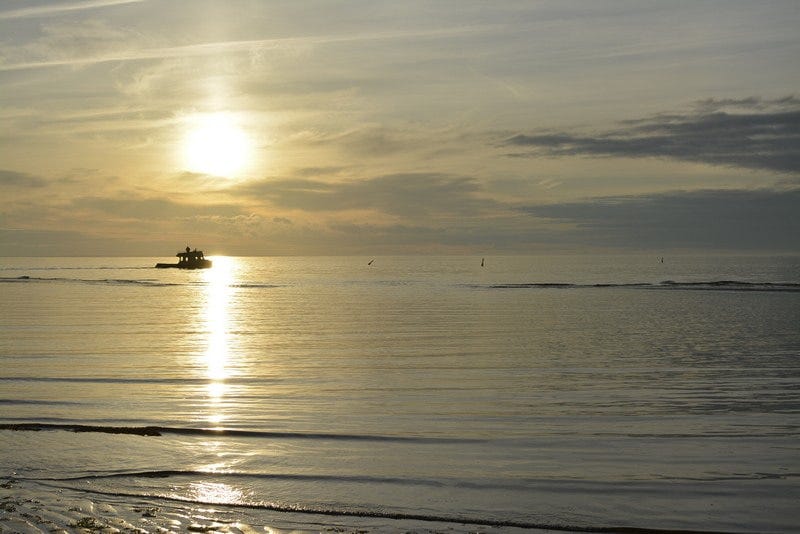
A lobster fishing boat leaving for the night in Shediac Bay. Photo: Célia Brás, CC BY 3.0, via Wikimedia Commons.
The Beauséjour seat has belonged to Dominic LeBlanc since 2000, and his family’s legacy runs even deeper than that. His father, Roméo LeBlanc, was an Acadian journalist turned MP and fisheries minister. In 1995, he went on to become the first Acadian to hold the office of Governor General. Dominic LeBlanc has spent a quarter-century representing the same coast as his father, and in doing so has become one of the most powerful ministers in Ottawa. In Mark Carney’s government, LeBlanc is President of the King’s Privy Council and the minister responsible for Canada–U.S. trade: which is to say, he is leading Canada’s side of the tariff and trade negotiations with Washington.
The fight to secure American and Canadian trade relations abruptly halted when trade talks between the two countries collapsed on August 21, 2026. Trump put 50% tariffs on roughly $20 billion of Canadian goods; Carney’s government in Ottawa answered with counter-tariffs on about $27.6 billion in American goods, which came into effect on September 8. The future of our relationship with the U.S. still remains uncertain, but the minister responsible for leading our interests certainly hails from a part of our country who know first hand the impact of American demand on Canadian livelihoods.
In 2025, LeBlanc took 60.6% of the vote, a 27-point win over Conservative candidate Nathalie Vautour. A comfortable win, but not quite the fortress it once was given that four years earlier the Liberal margin here was 36 points. The nine-point loss keeps this riding in lockstep with many others across the country: the NDP vote here fell from 11% to 2%. Additionally, the People’s Party share went from 8% to under 1%, and most of that voting share didn’t move to support LeBlanc. It consolidated on the right, and the Conservative share of the vote nearly doubled, from 19% to 33%. While the seat isn’t in any real danger of going blue, it’s also not the runaway red race it used to be.
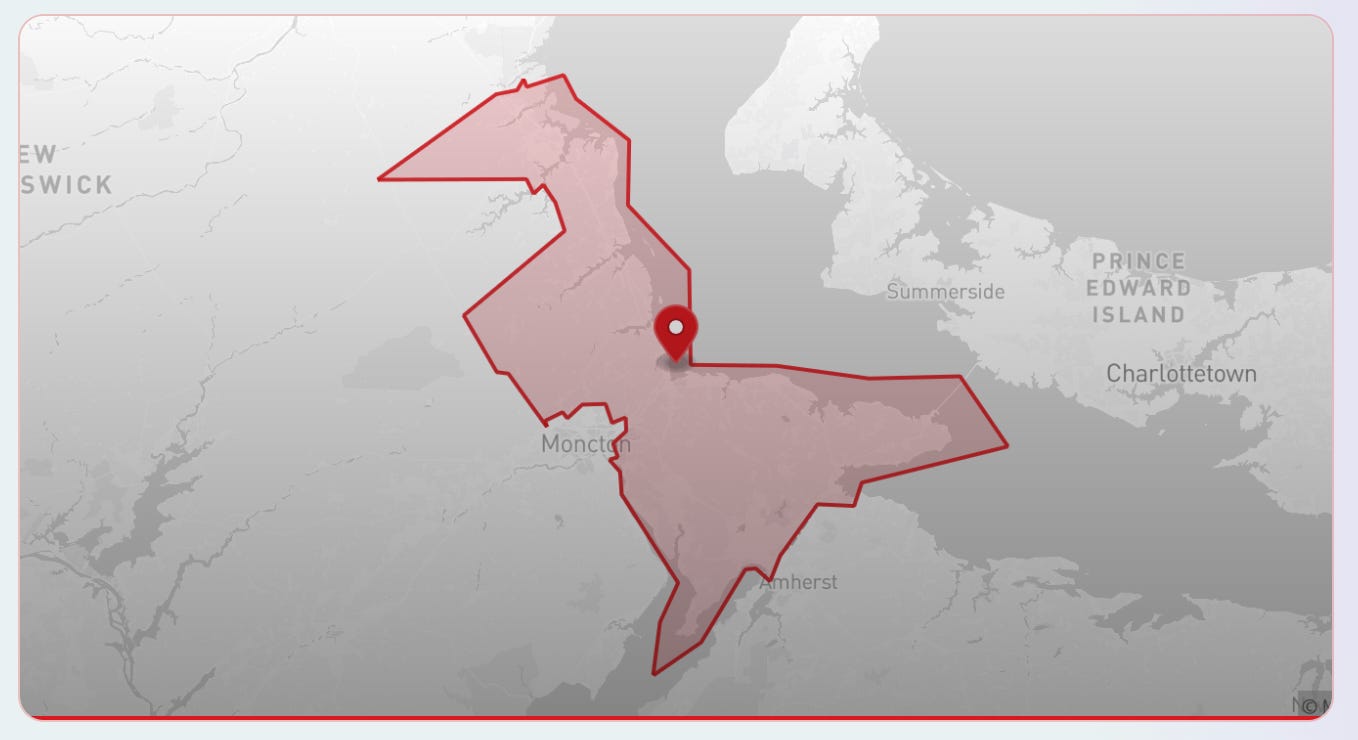
Seat projection by The Northern Vibe Project; base map ©Mapbox ©OpenStreetMap.
Our model still puts Beauséjour comfortably SAFE for the Liberal Party: 61% projected vote share and a win probability north of 99% if the next election was held today. As Canadian support continues to grow for the Carney government’s handling of the Trump administration, it’s no surprise that the minister for Canada-U.S. trade relations remains popular with his constituents. Yet, it should be noted that there are two more years of the Trump administration left. When Trump is involved, volatility follows.
The postcard for Beauséjour is warm water and the world’s largest lobster. The economy is held up by those who work on the water. While Beauséjour has spent a quarter-century sending Dominic LeBlanc back to Ottawa, it’s now his turn to be sent to Washington, D.C. to defend not only the New Brunswick fishing industry, but all Canadian economic and trade interests.
Stay curious,
Caitlin, from The Northern Vibe Project
Edited by Matt
Do you live in this riding? Let us know what it’s like!
Want to see your riding featured next? Let us know!
Contact us at contact@northernvibe.ca
Very informative! May Canada prevail in all trade talks with the bully to the south!