



Walk east from the Jacques-Cartier Bridge along Ontario Street and you’re in a different Montreal than the one shown on travel Canada commercials. Triple-decker walk-ups giving way to trendy cafes as you move through Centre-Sud and the Village. Head northwest instead, up past the Plateau, and you hit Mile End, where UQAM students, video game developers, and one of the highest shares of renters in the country (3rd / 343) share the same six square blocks.
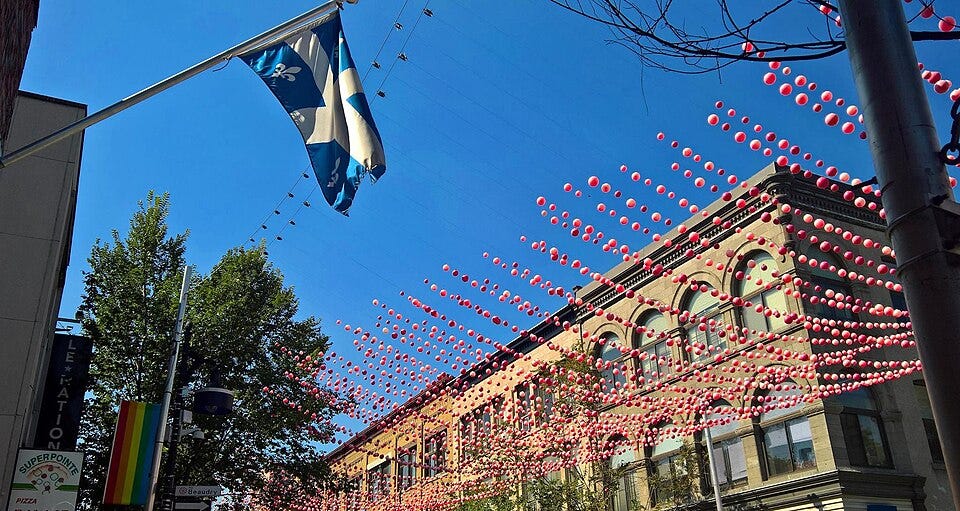
Rue Sainte-Catherine, Montreal's Gay Village, near Beaudry metro station. Photo: Andre Carrotflower, CC BY-SA 4.0, via Wikimedia Commons.
This is Laurier–Sainte-Marie: just over 100k people are packed into just over 20 square kilometres. This is one of the densest ridings in the Canada, and, as of this summer, an open seat for the first time in seven years. But, this riding is less about who holds it now and more about which way the country is leaning.
Steven Guilbeault, the riding’s Liberal MP since 2019, Canada’s former environment minister, and Mark Carney’s Quebec Lieutenant, announced in May that he’s resigning his seat in a quiet act of protest against his own government's energy policy.
For context, Guilbeault left cabinet in November 2025 after Prime Minister Mark Carney signed an energy memorandum of understanding (MoU) with Alberta Premier Danielle Smith that included a commitment to advance a new bitumen pipeline while suspending federal clean electricity regulations. He stayed in the Liberal caucus for months, internally pushing for a deal with Alberta that still could still be softened from the inside. In May, he told the House of Commons it was time to “pursue my life’s work” outside government.
That makes Laurier–Sainte-Marie the riding to watch this summer — not because the result is in doubt, but because of what triggered the vacancy.
The numbers underneath the story
The electoral history here reads like a case study in decline-and-realignment. Gilles Duceppe held it for the Bloc Québécois for 15 years into 2008 with a declining margin of victory in each subsequent election. In 2011, the orange wave broke the BQ’s grip on the seat, and most of Quebec: NDP’s Hélène Laverdière won the seat with 46.6% in the face of a BQ colapse to 34.9%. The NDP held it through 2015, then in 2019 the Liberals recruited Guilbeault, a Greenpeace and Équiterre veteran turned star candidate, who won the riding outright at 41.8% and again in 2025 with 52.1%.
Four different parties, four different mandates, and one pattern: this riding has voted with the national tide in every wave election of the past 30 years. It isn't a fortress like Edmonton Strathcona, it’s a bellwether, catching the wave every time.
So why is he leaving a seat he just won by 14 points, on a wave that was still building?
Because the story was never really about the riding itself. In 2025, Laurier–Sainte-Marie didn’t reject Guilbeault, and it didn’t reject the Liberals. Voters here just handed both their strongest mandate yet. The rupture is entirely intra-party: an environment minister who helped negotiate the Kunming-Montreal biodiversity framework and Canada’s first emissions reduction plan under Justin Trudeau, watching another prime minister unwind those files to strike a deal with Alberta.
Guilbeault said the quiet part out loud on his way out:
“we are rewarding bad behaviour”,
warning that concessions to Alberta could just as easily encourage separatist sentiment in Quebec.
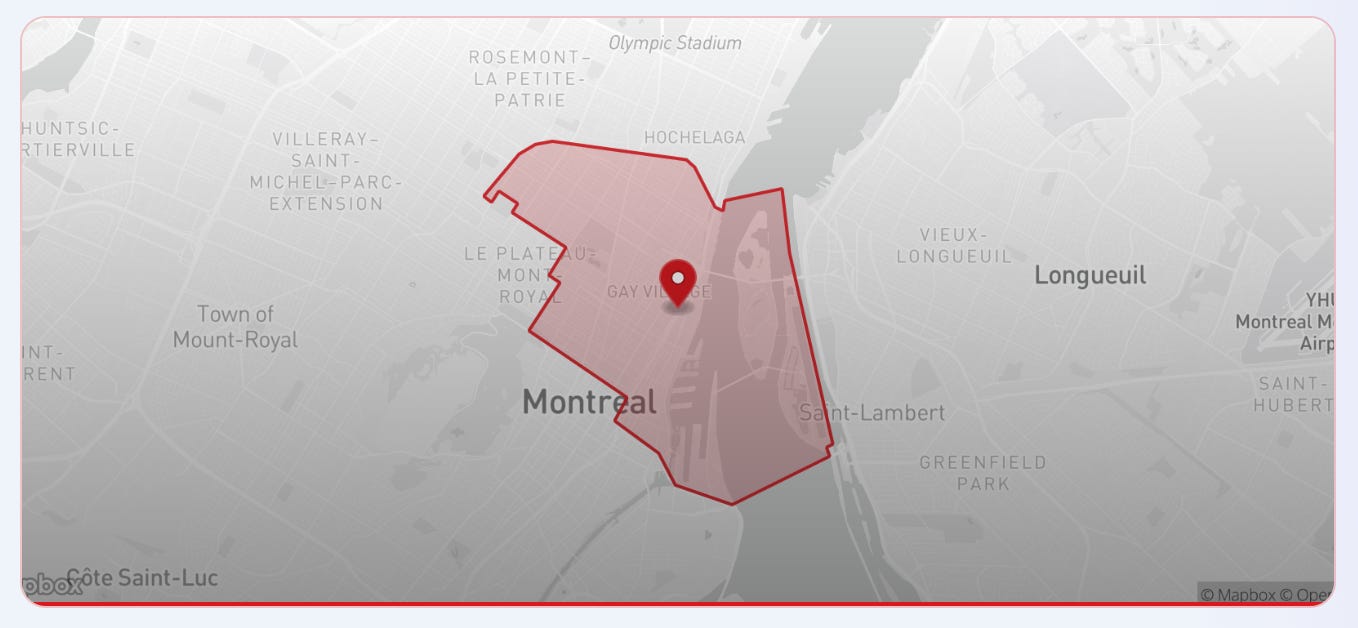
Seat projection by The Northern Vibe Project; base map ©Mapbox ©OpenStreetMap.
Our model still puts this riding comfortably in Liberal hands: 56% projected vote share, a win probability north of 99% while the NDP (18%) and Bloc (15%) trail well behind. One caveat worth noting is that our model still treats Guilbeault as the incumbent, since he hasn’t formally resigned yet. That likely inflates the Liberal number, whoever the party actually nominates won’t carry his personal vote. We’ll re-run this once a candidate is confirmed, but the underlying gap looks wide enough that the seat isn’t in real danger of flipping.
What to watch for in the byelection
Whoever the Liberals nominate inherits a riding that just gave Guilbeault his best-ever number, in a province where the BQ has been bleeding support in Montreal’s urban core for over a decade. The NDP, reduced to seven seats nationally and mid-leadership-transition under new leader Avi Lewis, will be fighting to prove that 2025’s collapse here wasn’t permanent. Don’t expect the Conservatives to be a factor in this election. This riding remains one of the least CPC-friendly ridings in the country.
The bigger question is whether this becomes a template for soft rebellion within the LPC. According to multiple reports, Guilbeault is far from the only Liberal frustrated with Carney’s rightward drift on environment and energy policy, and Laurier–Sainte-Marie will be the first real test of whether that frustration will cost the party anything at the ballot box.
Laurier–Sainte-Marie has never sat out a wave election. The only question left is which direction the wave comes from this time.
Stay curious,
Matt, from the Northern Vibe Project
Edited by Caitlin
Do you live in this riding? Let us know what its like!
Want to see your riding featured next? Let us know!
Contact us at contact@northernvibe.ca