



The province that gave the country medicare and the co-operative movement now contains its most entrepreneurial seat, and one of its safest Conservative ones.
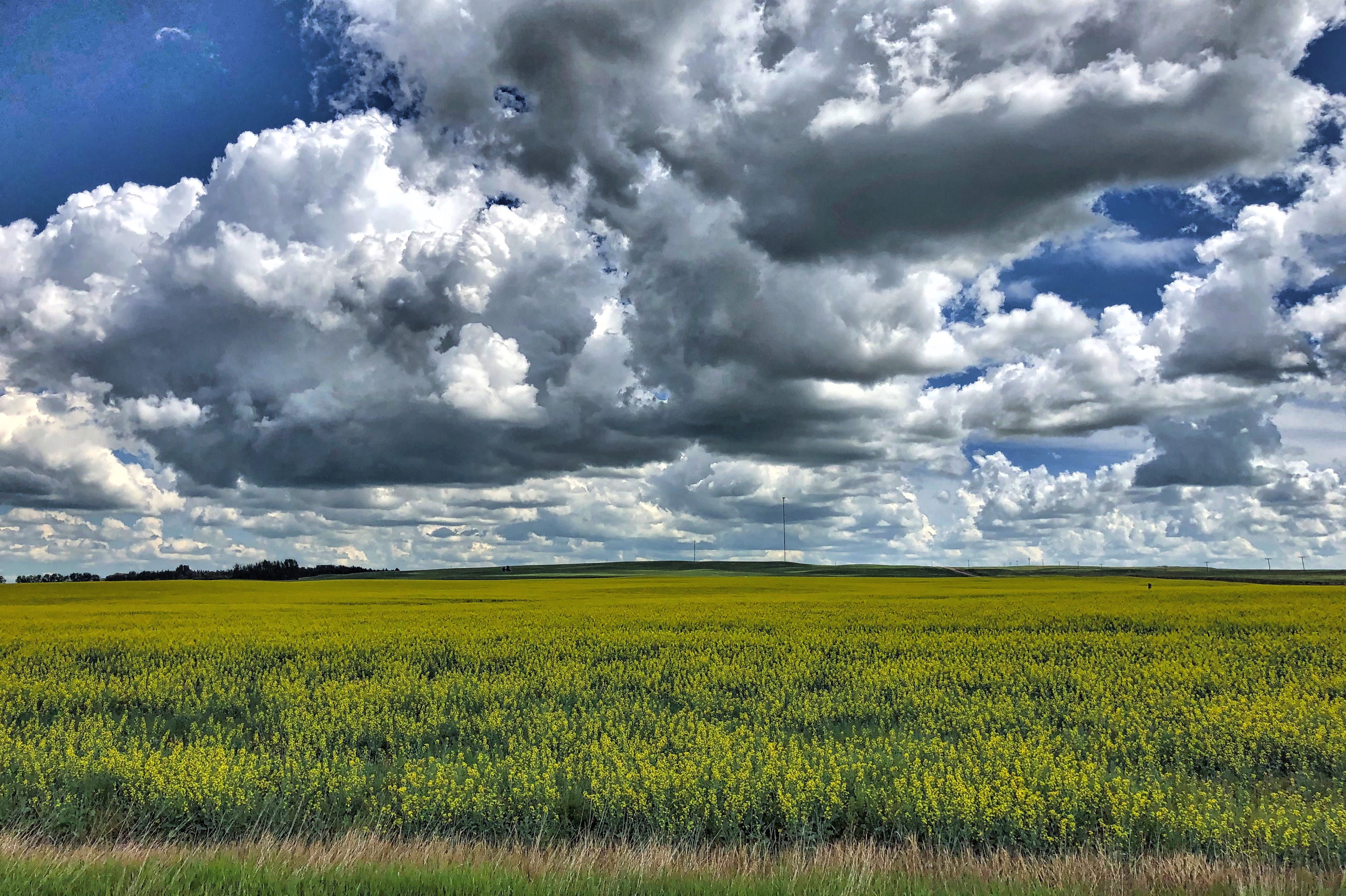
Canola near Shaunavon, in the riding’s southwest. Photo: Alan Levine (CC0).
Drive the grid roads out of Swift Current and the land does most of the talking. Canola and wheat to the horizon with cattle on the short-grass south toward the Montana line. This is a big riding, running from Grasslands National Park on the border north past Kindersley, a few hours of highway end to end. Almost all of it is working land.
It is also, by one measure, the most entrepreneurial place in the country.
Nearly one in three workers here (29%) are self-employed, the highest share of any of the 343 ridings in Canada. These are ranchers and grain farmers, owner-operator truckers, oilfield-service contractors, and main-street businesses in towns like Cabri, Leader, Shaunavon, and Maple Creek. Four out of five households own their home and unemployment sits at 5.4%, among the lowest in Canada. The median income is unremarkable, about $50,400, so this is not a story of wealth but one about self-reliance.
And here is the part that doesn’t fit the story the voting numbers tell.
Saskatchewan is the cradle of Canadian social democracy. The Co-operative Commonwealth Federation (CCF), the NDP’s direct ancestor, first formed government here in 1944 under Tommy Douglas, the first social-democratic government in North America, and the movement he led gave our country medicare. The great farmer co-operatives and the Wheat Pool were Saskatchewan institutions. The Matador Co-operative Farm, 17 veterans who pooled 10,000 acres of provincial land near Kyle in 1946, sat inside what is now this riding. This co-operative experiment took root in country that looks like the photo above.
While the fields stayed, the politics eventually inverted.
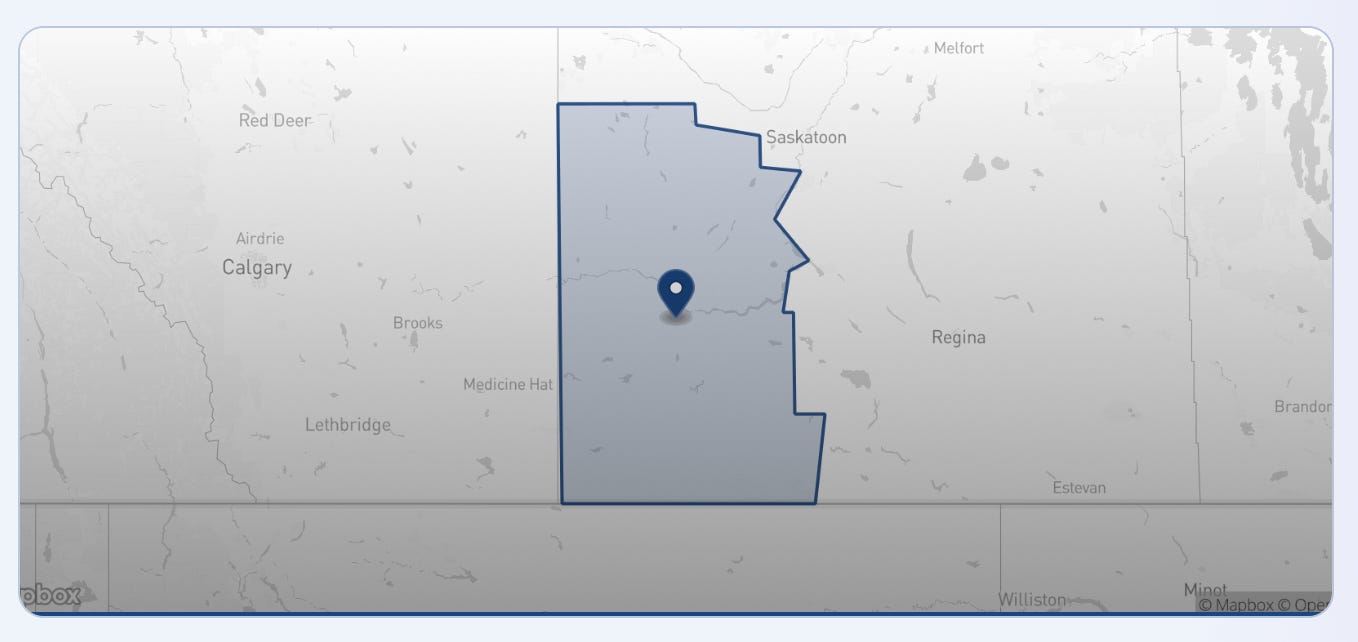
Seat projection by The Northern Vibe Project; base map ©Mapbox ©OpenStreetMap.
Through the Reform years and everything after, southwest Saskatchewan became some of the most reliably Conservative ground in Canada. In 2021 the Conservatives took 72% of the vote here, rising to 82% in 2025, resulting in a margin of nearly 71 points, among the widest in Canada. And the NDP, the CCF’s own descendant, finished third, under 6%, in the province that invented it.
On these numbers the model reads the seat as SAFE: a near-certain Conservative hold, with a win probability of essentially 100%. Effectively no run in the Northern Vibe simulation turns this riding into a contest. The fundamentals all pull the same way: an older population (a third over 65), fewer university degrees than the national average, and an economy of owner-operators in agriculture, energy, and the trades — all indicators that correlate with a population who tend to vote Conservative.
Historically, Saskatchewan taught Canada how to share risk through socialized programs like medicare. Now, its southwest corner has spent the last few decades deciding to carry risk alone, through private entrepreneurship.
Stay curious,
Matt, from the Northern Vibe Project
Edited by Caitlin
Do you live in this riding? Let us know what its like!
Want to see your riding featured next? Let us know!
Contact us at contact@northernvibe.ca